
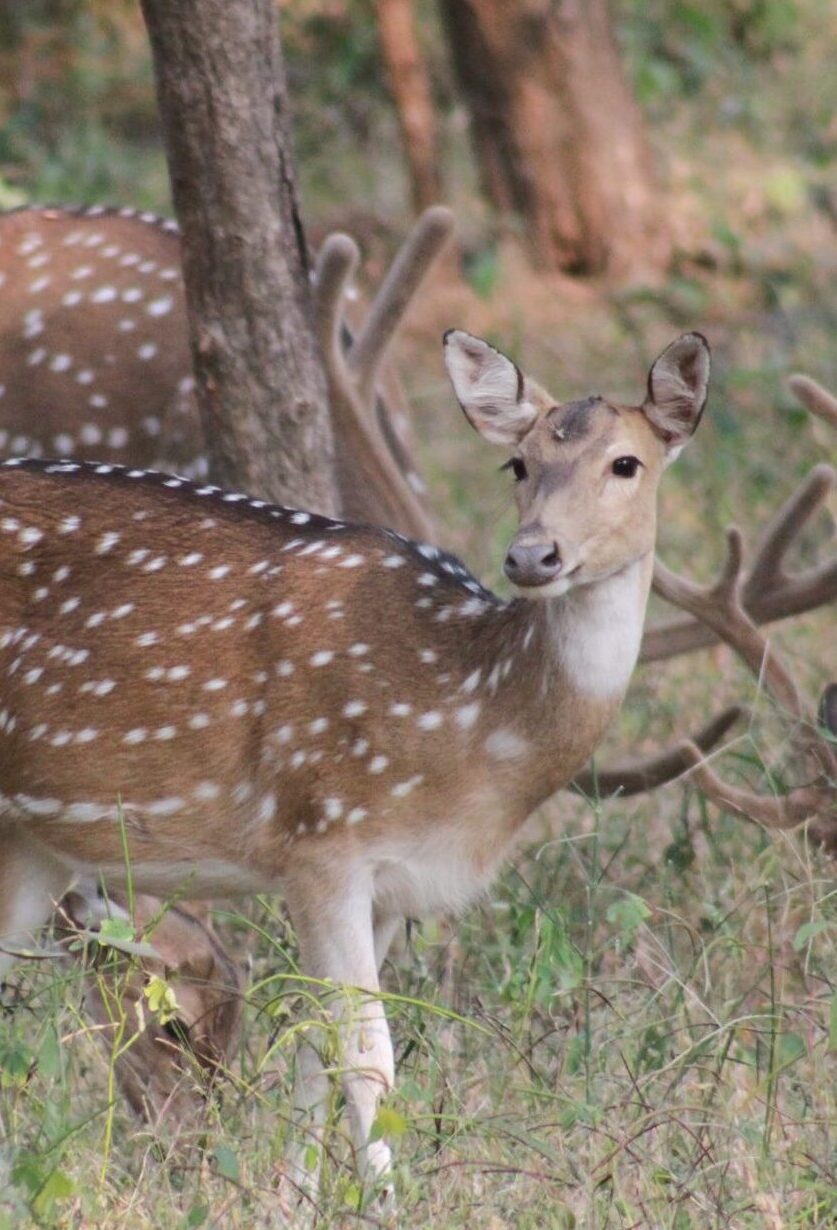

Discover the wild side of India with Wild Tiger Safari – where every moment is an adventure waiting to unfold.
Expert Guides: Our team of wildlife experts has professional experience in this field. Their expertise and experience enable them to carry out an incredible wildlife safari where you will get an amazing and unforgettable experience with us with great chances of tiger sighting.
Value for Money: Our safari gives you great value for money, and your experience will be nothing less than what you have paid for.
We also offer canter safari services as an affordable option for budget-conscious travelers. Reach out to us and get the complete
details. We also have an option to book a luxury gypsy which is a modified gypsy with our experienced team of guides and drivers.
Pick-up and Drop: We provide pick-up and drop facilities for the safaris from the hotels to our customers, making it easier for them.
They need not worry about how to reach the base point; instead, we reach them and give them a tension-free excursion.
Ranthambore National Park is divided into 10 safari zones for tourism. All the zones have their own wildlife diversity, landscape, and beauty. Every safari is conducted is one of the 10 zones. The safari vehicles are not allowed to change their allotted zone. A common perception is that tiger sightings are only in zones 1 to 5, whereas the tiger’s sightings also occur in zones 6 to 10. Tigers are territorial animals who like to mark their territory and protect them fiercely. All safari zones in Ranthambore have tiger territory. All Safari zones offer beautiful and phenomenal scenes in Ranthambore National Park. You can choose either a Ranthambore Canter safari or a Gypsy as a mode of transport for the jungle safari in Ranthambore safari zones.
Zone 1
The entry and exit gate to this zone is from Singh Dwar. This zone has good habitat for leopards and sloth bears as well as tigers. The landscape is beautiful and there is a huge lake in this zone which is also a good spot for birding.
Zone 2
The entry and exit gate to this zone is from Singh Dwar. There is movement of several tigers in this zone and there are many water bodies. During summers the tigers come out to the water bodies to escape the heat and drink water. The back wall of Ranthambore Fort is visible from this zone and it provides a picturesque setting.
Zone 3
The entrance of this zone is from the Jogi Mahal gate. It has three lakes, Padam Lake, Rajbagh Lake, and Malik Lake. The ruins of the fort are spread across this area and while you are on safari you can witness the mix of history, culture, and wildlife which is a unique feature of Ranthambore National Park.
Zone 4
This zone covers a large area and is one of the bigger zones of Ranthambore National Park. It is home to many tigers and cubs and has some spectacular viewing points.
Zone 5
The entrance of zones 4 and 5 is common. This zone has a wide diversity of flora and some beautiful water bodies. The evergreen Jamun trees provide a cool shade even during the hot summer months in this area.
Zone 6
This zone has extensive grasslands and a hilly terrain in some areas. The visibility is good and you can spot leopards, sloth bears, and tigers in this area.
Zone 7
The entrance of this zone is opposite the entrance of zone 6. It has a beautiful.
Zone 8
This zone has a hilly terrain and a stunning landscape. You can see the entire old city of Sawai Madhopur from this zone offering mesmerizing views.
Zone 9
This zone is situated at a distance (45 minutes) from the main area of Sawai Madhopur and the entry gate of zones 1 to 5 of Ranthambore National Park. It is situated on the bank of the Chakal River in the Paloudhi Range, Rajasthan. This area is also the habitat of other species like birds, sloth bears, and caracals which are rare to spot.
Zone 10
This zone has different terrain and vegetation compared to other zones in Ranthambore National Park. It is dominated by juliflora and is close to agricultural lands, providing easy meals to the tigers. Usually zones 1 to 5 are considered as better zones for tiger sightings but zone 10 is good for sightings as well.
The Ranthambore National Park has a jungle safari scheduled for visitors twice a day. One Ranthambore Safari timings safari starts in the morning, and the other safari late in the afternoon. Usually, the time for opening and closing the park gate for the Ranthambore jungle safari is according to sunrise and sunset. Generally, the park opens half an hour after sunrise for the morning safari and closes half an hour before sunset after the afternoon safari. Consequently, the jungle safari at Ranthambore is approximately three to three and a half hours in each shift.
It is necessary to remember the time of the jungle safari during the visit to Ranthambore, as the forest division provides strict instructions to follow the safari time. As the time of sunrise and sunset changes with the change of seasons, the time of entry and exit in Ranthambore National Park also changes.
| Month | Morning Trip | Afternoon Trip |
|---|---|---|
| October 1st to October 31st | 6:30 A.M. to 10:00 A.M. | 2:30 P.M. to 6:00 P.M. |
| November 1st to January 31st | 7:00 A.M. to 10:30 A.M. | 2:00 P.M. to 5:30 P.M. |
| February 1st to March 31st | 6:30 A.M. to 10:00 A.M. | 2:30 P.M. to 6:00 P.M. |
| April 1st to May 15th | 6:00 A.M. to 9:30 A.M. | 3:00 P.M. to 6:30 P.M. |
| May 16th to June 30th | 6:00 A.M. to 9:30 A.M. | 3:30 P.M. to 7:00 P.M. |
Ranthambore is located in Sawai Madhopur district of Rajasthan. The nearest airport is Jaipur and the nearest railway station is Sawai Madhopur Railway Station, which is located at a distance of 10 km from the park.
Delhi: Ranthambore National Park is 341.6 kms from Delhi via NE4 and takes an approx time of 5 hours and 30 minutes.
Jaipur: For Ranthambore Safari you need to travel 190.6 kms from Jaipur via NH52 and takes an approx time of 3 hours and 43 minutes.
Agra: From Agra you need to travel 285 kms to reach Ranthambore National Park via Bikaner- Agra road and takes an approx time of 5 hours and 21 minutes.
Mumbai: Ranthambore is 1076 kms away from Mumbai via NH48.
Kolkata: Ranthambore National Park is 1627.6 kms away from Kolkata via NH19.
Lucknow: Go on Ranthambore Safari from Lucknow just after travelling 619.5 kms via Lucknow Expy and Bikaner-Agra road.
By Road
Ranthambore National Park is well connected by road from the major cities of Rajasthan, such as Jaipur, Jodhpur, Kota, Udaipur, and Ajmer, as well as from the capitals of other states, such as Delhi, Chandigarh and Lucknow. You can travel by bus from most of the major cities of Rajasthan, where both Government and Non-Government buses run on a regular basis.
By Train
Sawai Madhopur railway station is the nearest railway station to Ranthambore National Park. Trains from cities such as Jaipur, Delhi, and Mumbai directly come to Sawai Madhopur. You can reach your accommodation or the park by bus, taxi or a private car from the railway station. The railway station is about 30 minutes from the park gate.
By Air
The nearest airport is Jaipur International Airport. The airport is well connected with flights from Indian cities such as Delhi, Kolkata, Mumbai, Bangalore, Ahmedabad and Chennai and overseas destinations such as Dubai, Abu Dhabi, and Bangkok. This distance from Jaipur airport to Ranthambore National Park is about 200km and can be traveled by road or train.







Founder

Co-Founder

Business Manager

Marketing Manager

We’re happy to assist you 24×7 with our dedicated team of advisors.
+91 95115 70093
info@wildtigersafari.com
We would be more than happy to help you. Our team adviser are 24/7 at your service to help you.
Sawai Madhopur
(91) 95115 70093
sales@wildtigersafari.com
